

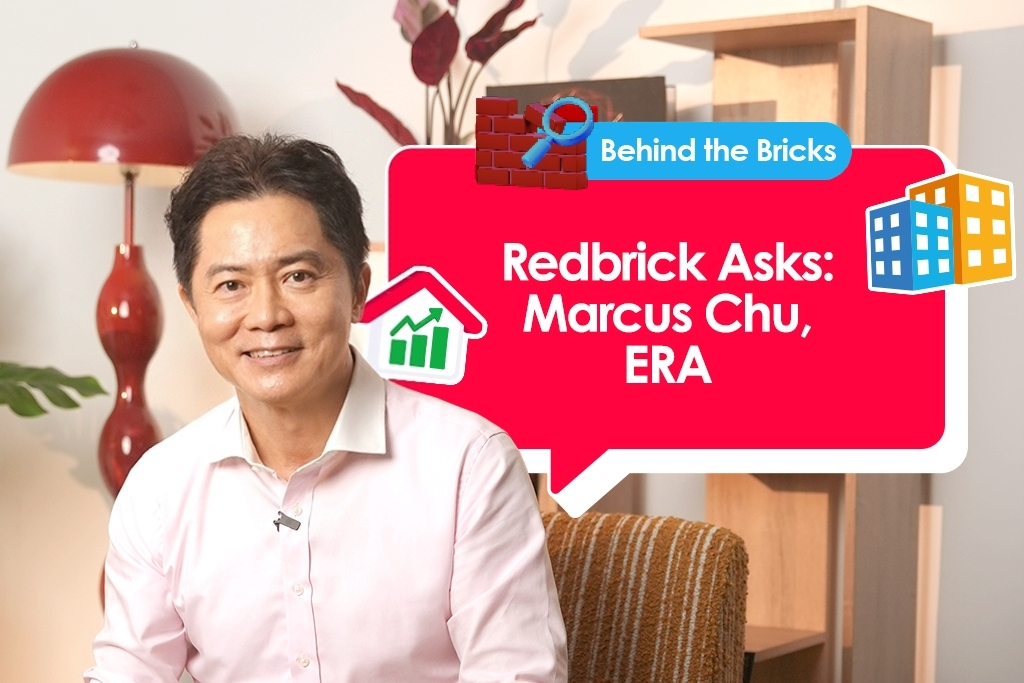
While many property seekers view their first purchase as the ultimate destination, Marcus Chu wants you to see it as just the opening step of a much larger journey. As the CEO of ERA Singapore and an industry veteran with over three decades of field experience, Marcus brings a master strategist’s lens to the local real estate landscape.
He challenges the traditional “forever home” mindset, urging first-time buyers to secure their very first property with their second one already in mind. Stripping away generic sales pitches, Marcus shares practical wisdom on how to tap into the power of responsible leverage without losing your peace of mind and how the URA master plan is the ultimate investment roadmap.
For anyone looking to make their property work for them, rather than working for their property, his time-tested insights below serve as an indispensable blueprint.
Q. What’s one piece of advice you would give to first-time homebuyers?
Marcus: As a first-time homebuyer, my absolute best advice is to think beyond your first home. Most first-timers focus entirely on finding their “forever home,” but you should view your first property as a stepping stone and a way to create options for your future. Buy your first home with the second home already in mind.
This means you must prioritise future resale potential: analyze who the next buyer will be, what they will want and how location and connectivity will matter to them down the road. If your ultimate goal is to upgrade, you will want to maintain maximum flexibility, so be highly comfortable financially and leave plenty of room in your budget for life’s unexpected changes.
Q. Is there a ‘best time’ to buy a property?
Marcus: I always say there is no single “best time” to buy a property based on trying to predict the peaks and troughs of the cycle. In a resilient environment like Singapore, the winning strategy has always been about time in the market, not trying to time the market. The most proven approach to building wealth in real estate is to identify a property that has genuine headroom price potential, secure it when you are financially ready and comfortably ride the market growth over the long run.
Q. Would you buy a home to live in, or as an investment?
Marcus: It really doesn’t have to be one or the other; you can absolutely achieve both. Over my three decades in the industry, I’ve seen countless Singaporeans buy a home for own use, enjoy living in it with their families, and later sell it to cash in on strong capital appreciation.
You just need to look at the purchase through two distinct lenses: First, can your family find joy and happiness living there today? And second, will the property remain highly attractive to future buyers tomorrow? At the end of the day, the property has to work for you, not you work for that property.
Q. When choosing a home loan, do you prefer fixed or floating interest rates?
Marcus: If you get to choose, the general rule of thumb is straightforward: you want a fixed-rate home loan when macroeconomic interest rates are expected to rise, and you shift to a floating interest rate when rates are on the way down. It is all about aligning your mortgage strategy with prevailing market trends to protect
your cash flow.
Q. When taking a loan, do you think it is better to borrow more or pay it off as quickly as possible?
Marcus: It completely depends on your life stage, your timeline, and your goals. While many clients take immense pride in rushing to become completely debt-free to eliminate their monthly repayments, they often miss out on the immense wealth-building power of leverage. If you have a long timeline and your plan is to
eventually upgrade, maximum responsible leverage is the way to go because it dramatically amplifies your returns over the loan term.
However, the “right” loan amount isn’t simply the absolute maximum a bank will give you; it is the amount you can comfortably service every single month without stress. Always maintain a cash buffer of at least 6 to 12 months of emergency funds so your leverage helps you grow rather than keeping you awake at night.
Q. What advice would you give someone who wants to start investing in property?
Marcus: Real estate investment boils down to three core pillars: capital gain, cash flow, and wealth preservation. First, always follow where the jobs and infrastructure changes are going, because people follow jobs. When a vicinity creates jobs, housing and rental demand spike, naturally driving up capital gains.
Second, buy into the growth narrative before everyone else sees it. The best-performing assets always start with a strong growth story long before the physical transformation becomes obvious and you can find these clues
easily by studying the URA master plan. Lastly, think long-term. Property is a vehicle for compounding quality assets over 10 to 15 years, not a short-term lottery ticket. Invest where people will want to live, work and commune in the future.
Q. Who or what influenced the way you think about investing?
Marcus: My investment philosophy has been deeply shaped by more than 30 years on the ground in the real estate industry. By actively observing and analysing how top-tier property investors systematically build their portfolios, upgrade their assets and accumulate multi-generational wealth over time, I learnt the mechanics of what separates a speculative gamble from a truly successful property roadmap.
Q. Do you think property is a good way to build long-term wealth?
Marcus: Yes, absolutely. Real estate remains one of the most stable, time-tested vehicles for medium to long-term wealth creation. Because you are utilising the power of compound interest alongside structural economic growth, holding quality real estate assets over a 10- to 15-year horizon inevitably yields massive
capital growth that far outpaces standard inflation.
Q. Do you think owning property should be part of your retirement plan?
Marcus: Most definitely, yes. There is a common misconception that Singaporeans are asset-rich and cash-poor, but your property is actually the single biggest store of wealth you will accumulate over a lifetime. A well-planned
property journey gives you incredible structural flexibility later in life; you can choose to right-size when the time is right, rent a portion of it out, or unlock equity to create passive income. Your property shouldn’t just be the roof over your head today. If planned correctly, it will actively fund the exact retirement lifestyle you
want tomorrow.