

In the world of investing, we are often taught to hyper-focus on maximizing yield, timing the market, and locking our capital into tangible assets. But how does a seasoned stock market investor view the rigid, highly illiquid world of real estate?
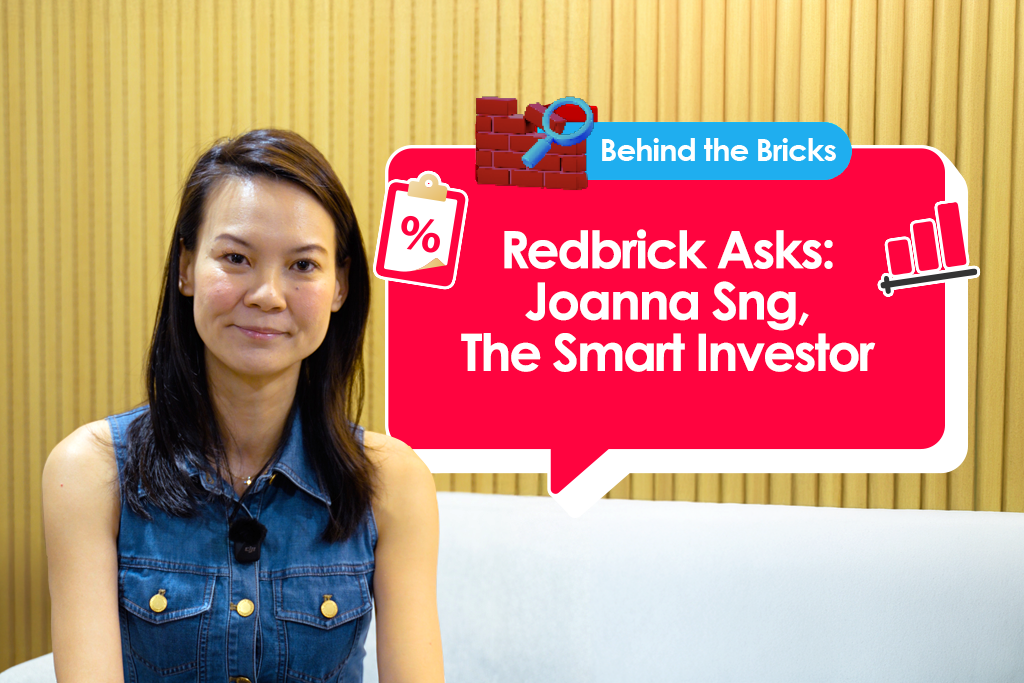
To find out, we sat down with Joanna Sng, Co-Founder of The Smart Investor, to get her refreshing, portfolio-driven take on property ownership. Bringing the same long-term, dividend-focused discipline she applies to equities, Joanna strips away the emotional hype of property buying.
She approaches real estate through the lens of capital efficiency, treating a mortgage not as a lifelong burden, but as a dynamic cash-flow management tool.
Joanna shares her candid insights on why she treats property as just one moving part of a broader investment portfolio, the hidden value of lifestyle flexibility, and why the best financial strategies are the ones designed to survive real life.
Q. What’s one piece of advice you would give to first-time homebuyers?
Joanna: Don’t just ask, “Can I afford this today?” The question to ask yourself should be “Will this still feel manageable in a few years?” As the years go by, kids come along, work evolves, and your priorities shift.
When we made our decisions, I always thought about whether it would still work even if things didn’t go exactly as planned. A home should give you stability, not stress.
Q. Is there a ‘best time’ to buy a property?
Joanna: To buy a home (not property), there’s no perfect time. Markets move; interest rates change but your life stage matters more. If you’re financially ready and the property fits your needs and financial ability, that’s usually a better signal than trying to time the market.
Q. Would you buy a home to live in, or as an investment?
Joanna: We bought our property to live in… but we don’t live in it. For me, it has to be both or at least have the flexibility to be both. We bought our investment property with the mindset that we could live in it if needed.
In the end, we chose to rent it out and rent a place closer to our boys’ school instead. That flexibility made a big difference. It allowed us to adapt to our living situation without being locked into one outcome.
Q. When choosing a home loan, do you prefer fixed or floating interest rates?
Joanna: When I got my mortgage, interest rates were already quite high. Locking into a fixed rate would have meant committing to that higher cost for a few years, so I chose to stay on a floating rate instead. It gave me more flexibility if rates came down over time, which it did.
Q. When taking a loan, do you think it is better to borrow more or pay it off as quickly as possible?
Joanna: I don’t think there’s a single right answer. It depends on your overall plan. Some people are comfortable using leverage while investing elsewhere. Others prefer the peace of mind of reducing debt.
For me, If the cost of the loan is lower than what I can earn by reinvesting that capital into dividend-paying stocks or REITs, I’d rather keep the liquidity. I treat a mortgage as a cash-flow management tool. If my money can work harder elsewhere, I let it.
Q. Who or what influenced the way you think about investing?
Joanna: My approach to investing was shaped by one simple idea: the best strategies are the ones that survive real life. Building The Smart Investor reinforced that for me. Because investing doesn’t happen in a vacuum. It happens alongside kids, career changes, and shifting family priorities. A lot of it also comes from experience and responsibility.
Running a business, going through different life stages, raising three kids. It changes how you think about risk. I used to focus more on returns. Now I think more about resilience and how something performs not just in good times, but across different seasons.
Early on, I also learnt a lot about long-term investing during my time at The Motley Fool, and from working with David Kuo. He really embodies long-term thinking. David literally epitomizes this; he doesn’t sell.. and that stayed with me.
Q. Do you think property is a good way to build long-term wealth?
Joanna: Property is not the only way to build long-term wealth. It gives you stability and the potential for appreciation over time. But it’s also less liquid, and it can tie up a large part of your capital. So, for me, it’s always been about balance.
I see property as one part of a broader portfolio, alongside other investments like equities that can provide income and flexibility. Different assets do different jobs. The goal is to build something that works together, not rely on just one.
Q. If you could restart your property journey, what would you focus on most?
Joanna: Our first home wasn’t a great investment on paper. But I don’t regret it at all. It was where we built our life together—where we grew our family, and where a lot of our early memories were made. Looking back, what it taught me is that not every property decision needs to be optimized for returns. Some homes are meant to serve a different purpose.
If I could restart my property journey, I would be more intentional about knowing when I’m buying a home, and when I’m making an investment.