

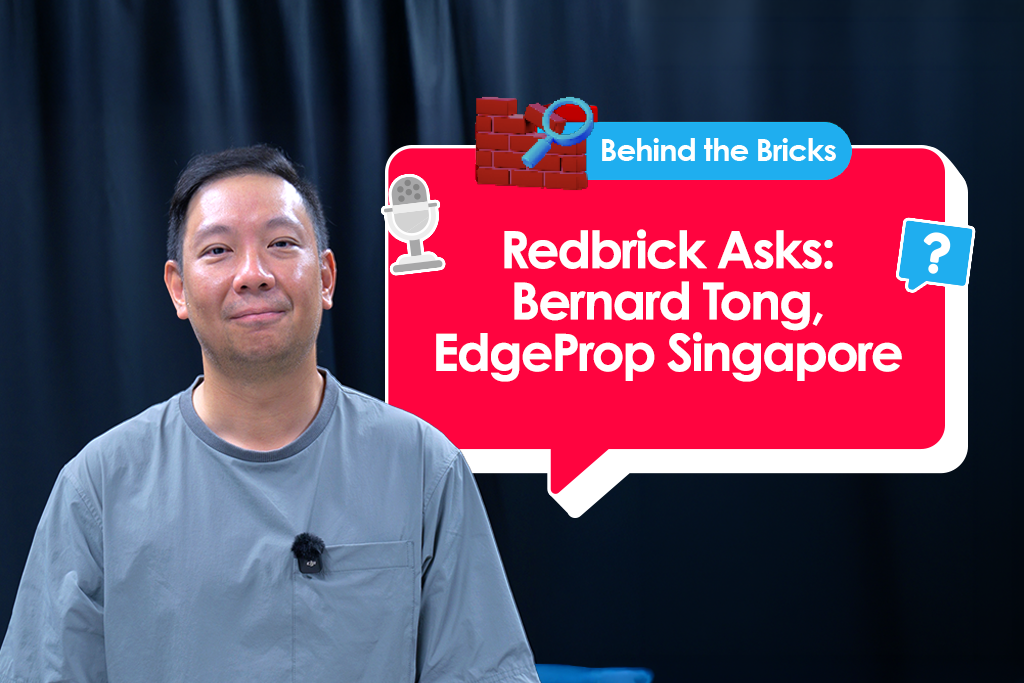
When it comes to navigating the real estate market, it is easy to get overwhelmed by the sheer volume of noise, conflicting advice, and fluctuating market trends. To cut through the clutter, we met up with Bernard Tong, the CEO of EdgeProp, to get his pragmatic, data-driven take on property ownership and investing.
Bernard shares his candid insights on everything from the myth of “timing the market” to navigating home loans and managing long-term wealth. His advice is a must-read, whether you’re a first-time homebuyer trying to figure out your budget or an aspiring investor looking to run your own numbers.
This new series on “Redbrick Asks” serves up a candid, insightful conversation on making smart, flexible property decisions without overstretching your boundaries.”
Q. What’s one piece of advice you would give to first-time homebuyers?
Bernard: The most important thing is to buy something you can actually afford; you really don’t want to overstretch yourself right at the start. Your first property is a major commitment, so you need to look closely at your financials and make sure you aren’t maxing out your budget, because you want to leave room for life changes down the road.
Q. Is there a ‘best time’ to buy a property?
Bernard: There’s a well-known saying when it comes to investment—that time in the market is actually more important than trying to time the market. This is particularly true for an asset class like real estate. Staying invested over the longer term is what will give you better returns.
Q. Would you buy a home to live in, or as an investment?
Bernard: Personally, for me, I would buy a home just to live in. While I would love to buy a property strictly for investment in Singapore, the current tax implications and ABSD duties make it difficult to generate a viable return on a second residential property.
However, I do know of people who successfully buy older condominiums or HDBs and subdivide the spaces into different rooms to rent out, which allows them to fetch a much higher yield than traditional properties.
Q. When choosing a home loan, do you prefer fixed or floating interest rates?
Bernard: Well, if I get to choose, I will obviously prefer fixed rates when interest rate expectations are going up, and floating rates when rates are on the way down. But since we all know that’s technically impossible to predict perfectly, I generally prefer floating rates. Floating rates naturally adjust with the prevailing market and economic conditions, which keeps you aligned with the broader economic environment.
Q. When taking a loan, do you think it is better to borrow more or pay it off as quickly as possible?
Bernard: It really depends on what you are actually able to do with the surplus cash you have on hand. If you are confident that you can generate better returns from that cash, whether that’s by investing in other asset classes or putting it into a business—then yes, it makes sense to take as much loan as possible and deploy that cash elsewhere.
But if you don’t have a specific purpose for it and the money is just sitting idle in a bank earning low interest, then it is definitely wiser to pay off your loans as quickly as possible.
Q. What advice would you give someone who wants to start investing in property?
Bernard: The best advice I can give someone is to do your own research. Don’t just go with your gut feel, and don’t just blindly trust the advice of your friends or parents. In this day and age, data is incredibly accessible.
Platforms like EdgeProp publish an immense amount of data and property transaction statistics to help you run your numbers, and there are plenty of free government portals out there as well. Use these tools to analyze the facts before making the most important purchase of your life.

Q. Who or what influenced the way you think about investing?
Bernard: For me, it comes down to a core philosophy: really understanding exactly what you are investing in is critical. I’ve learned that you shouldn’t step into any asset class unless you’ve done the groundwork to know its mechanics, the underlying data, and the market risks.
Q. Do you think property is a good way to build long-term wealth?
Bernard: Yes, absolutely. Real estate is a historically proven asset class, and staying invested over the long run tends to yield solid returns that outpace inflation. It definitely should be a pillar of your long-term wealth, but with that said, it shouldn’t be the only thing sitting in your investment portfolio.
Q. Do you think owning property should be part of your retirement plan?
Bernard: Yes, it ties back to the same principle. Having real estate as part of your retirement portfolio provides an excellent safety net and potential passive income, but diversification is key. You want property to support your retirement, but you shouldn’t be entirely asset-rich and cash-poor.
Q. If you could restart your property journey, what would you focus on most?
Bernard: If I could start all over again, I would focus heavily on flexibility. When you are young, it is easy to buy for your immediate needs, but your life circumstances will inevitably change over time. Whether it’s career shifts, family expansion, or changes in the financial landscape, having an exit strategy or a property that can adapt to those changes is incredibly valuable.