
Being debt-free can bring peace of mind. But before putting a large sum into your home loan, it is worth asking what else that money needs to do.
An early repayment can reduce the interest you pay and may shorten your loan tenure. It also turns accessible cash into home equity. Whether that trade-off makes sense depends on your mortgage terms, emergency savings, investment risk and longer-term plans.
For Singapore homeowners, the decision should also account for whether the loan is from HDB or a bank, how CPF is being used, and any applicable repayment conditions.
1. What does paying off your home loan early actually do?
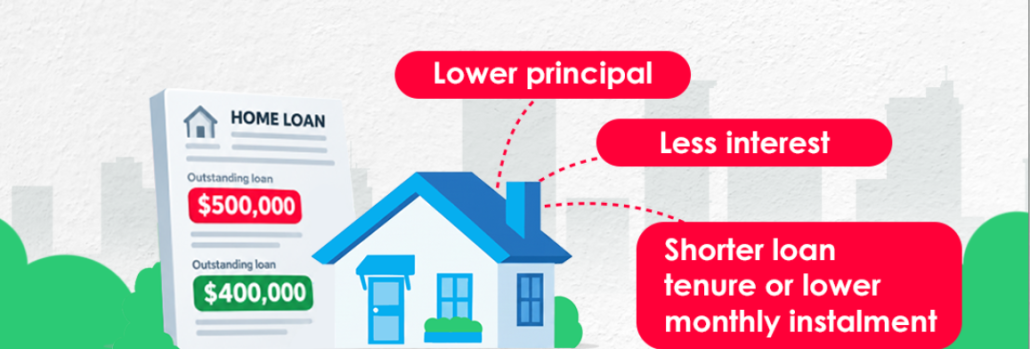
An additional repayment reduces the outstanding principal. Depending on the loan’s terms and how the bank’s policy, this can reduce the interest charged over time, shorten the repayment period, lower future instalments, or a combination of these.
The interest avoided is not the same as an investment return. It is a saving on borrowing costs, and the amount depends on the outstanding balance, interest rate, repayment schedule and any fees.
2. Should you repay your mortgage or invest the money?
Suppose your mortgage rate is 3% a year and you have S$50,000 available. Using it to reduce the loan can lower future interest costs. Investing it may offer the possibility of higher returns, but those returns are uncertain: investments can fall in value, underperform or take years to recover.
The comparison is not simply “3% versus 6%”. Consider the risk you would take to pursue the potential return, whether you can leave the money invested, the fees and taxes involved, and whether a market downturn would affect your ability to meet your mortgage payments.
A lower mortgage rate may make investing worth considering for some households; a higher rate can increase the appeal of repayment. Neither factor decides the question on its own.
3. Cash gives you options; home equity is less accessible
Once savings go into your property, you may have more equity but less cash available for emergencies. If income falls, a family member needs help or an unexpected bill arrives, mortgage instalments and household expenses still need to be paid.
Accessing money tied up in a property may require refinancing, additional borrowing or selling. These options can involve eligibility checks, costs and delays, and are not guaranteed to be available when needed.
Before making a large repayment, consider keeping an emergency fund that reflects your household expenses, income stability and dependants. MoneySense commonly gives three to six months of expenses as a general emergency-savings guide; your circumstances may call for more.
4. Is being debt-free always better before retirement?
Clearing a mortgage before retirement can reduce monthly commitments and provide peace of mind. But a fully paid-off home does not automatically mean you have enough cash for daily living, healthcare, family support or unexpected costs.
Consider two households: one owns its home outright but has limited liquid savings; the other still has a manageable mortgage and keeps more savings accessible. Neither position is automatically better. The outcome depends on income, expenses, loan size, other assets and risk tolerance.
For Singapore homeowners, include your CPF position, expected retirement income and the cash you may need for ongoing expenses. Treat mortgage repayment as one part of retirement planning, not the whole plan.
5. A worked illustration: repay S$100,000 or invest it?
The illustration below shows how the comparison can change when both the mortgage and the cash flows are modelled. It is hypothetical, not a forecast or a recommendation.
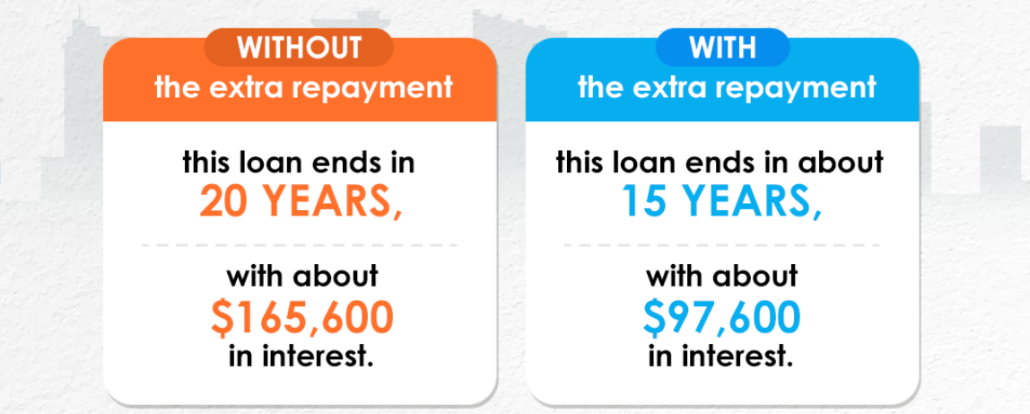
Under these assumptions, the scheduled monthly instalment is approximately S$2,773. If S$100,000 is paid into the mortgage immediately and the same instalment continues, the loan will be paid off in about 15 years.
Over the original 20-year schedule, the mortgage interest would be about S$165,600 without the lump-sum repayment. With the S$100,000 repayment and the same monthly instalment, the interest would be about S$97,600. The estimated interest saved is therefore about S$68,000.
If the borrower invests $100,000 instead at a steady 6% annual return for 20 years, it will grow to about S$331,020 before fees and taxes. This is a mathematical illustration only; actual investment returns are not steady or guaranteed.
These figures illustrate why a fair comparison must include both interest saved and what happens to cash flows under each option. They do not account for changing mortgage rates, fees, taxes, investment volatility, CPF effects or changes in household circumstances. Actual results will differ.
For your own loan, ask the banker for an updated repayment illustration and compare it with a realistic investment scenario using the same time horizon and cash-flow assumptions.
6. HDB loan or bank loan? Check the repayment conditions
The rules are not identical. HDB’s published guidance says there is no lock-in period or administrative fee for partial capital repayment of an HDB housing loan. HDB also sets minimum repayment amounts and a process for submitting the request; check the current conditions before proceeding.
Bank mortgage conditions depend on the specific package. Check for a lock-in period, early repayment fee, minimum amount, notice requirement and whether a partial repayment changes your monthly instalment or shortens the tenure. Do not assume that one bank’s conditions apply to another loan.
If you use CPF savings, check the CPF rules and how repayment may affect your housing and retirement plans. For eligible HDB flat owners, the CPF Home Protection Scheme (HPS) provides mortgage-reducing cover for specified events, subject to eligibility, coverage share, sum assured and policy terms. It should not be treated as a blanket guarantee that every mortgage will be fully repaid in every circumstance.
7. Before making an extra repayment, check these five things
- Your mortgage rate and whether it can change.
- Your emergency savings and upcoming household commitments.
- Your investment time horizon and ability to absorb losses.
- Your loan’s early repayment rules, fees and notice requirements.
- Your other debts, CPF position and longer-term financial goals.
Paying off a mortgage early may be less urgent if you have higher-interest debt or insufficient emergency savings. Equally, reducing debt may be a priority if you value certainty and want lower future commitments. The right decision depends on your overall financial position, not just the mortgage rate.
Frequently asked questions
Is it better to pay off your home loan early or invest?
It depends on your mortgage rate, investment risk, cash reserves and financial goals. Repaying can reduce future interest costs; investing offers potential growth but involves risk. Compare both options over the same period and include the cash flows under each.
Does paying off a home loan early save interest?
It can. An additional principal repayment may reduce interest payable over the remaining tenure. The actual savings depend on your loan terms, repayment structure, interest rate and any applicable fees.
Should I use all my savings to pay off my home loan?
Using all your savings may leave you without enough accessible cash for emergencies and other expenses. Consider keeping an emergency fund and setting aside money for foreseeable commitments.
Should I pay off my mortgage before retirement?
Reducing the mortgage can lower future monthly commitments, but you also need sufficient accessible savings and retirement income. Consider your CPF position, outstanding loan, expenses and expected cash flow.
Can I make an early repayment on my Singapore home loan?
The conditions depend on whether you have an HDB or bank loan and the terms that apply to your mortgage. Check repayment rules, lock-in periods, notice requirements and fees before proceeding.
Make the decision with your full financial picture in mind
Paying off your home loan early can be a sensible choice. It can reduce interest costs, lower future commitments and provide peace of mind. Keeping cash available can provide flexibility, while investing may offer long-term growth with risk.
Before committing your surplus cash, consider your loan terms, savings, investment goals, family commitments and retirement plans together.
If you are considering an early repayment or reviewing your existing home loan, the Redbrick Mortgage Advisory team can help you understand your mortgage options and the terms of available loan packages.